
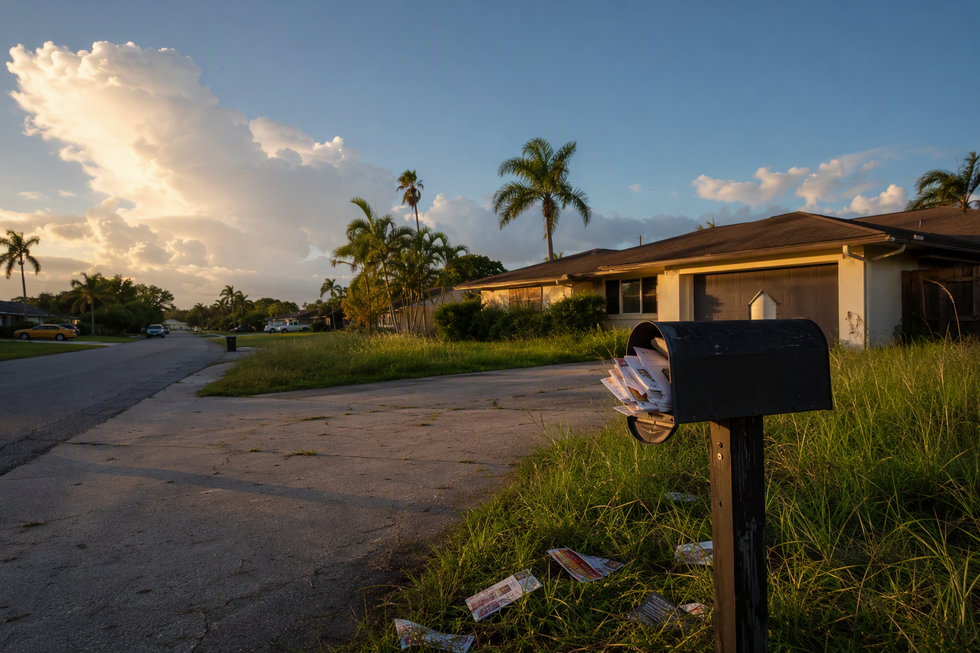
Key Highlights
- Florida sets no deadline for opening an estate. The pressure comes from other clocks, not a filing cutoff.
- The custodian of an original will must deposit it with the clerk within 10 days of learning the testator died, under Fla. Stat. § 732.901.
- Two years after the death, claims against the decedent are barred outright by Fla. Stat. § 733.710, whether or not anyone ever opened an estate.
- Once someone has been dead more than two years, summary administration becomes available regardless of value.
- Any interested person may petition for administration under section 733.202, so a stalled executor does not stop the family.
The short answer: how long do you have to file probate after death in Florida has a surprising answer, which is that the Probate Code sets no outside deadline at all. You can open an estate one month after a death or ten years later. What Florida imposes instead is a 10-day duty to deposit the original will, a set of deadlines that only start running once a case is opened, and a two-year wall after which creditors lose their claims. Knowing which clock you are on is the entire point.
Is There a Legal Deadline to File Probate After Someone Dies?
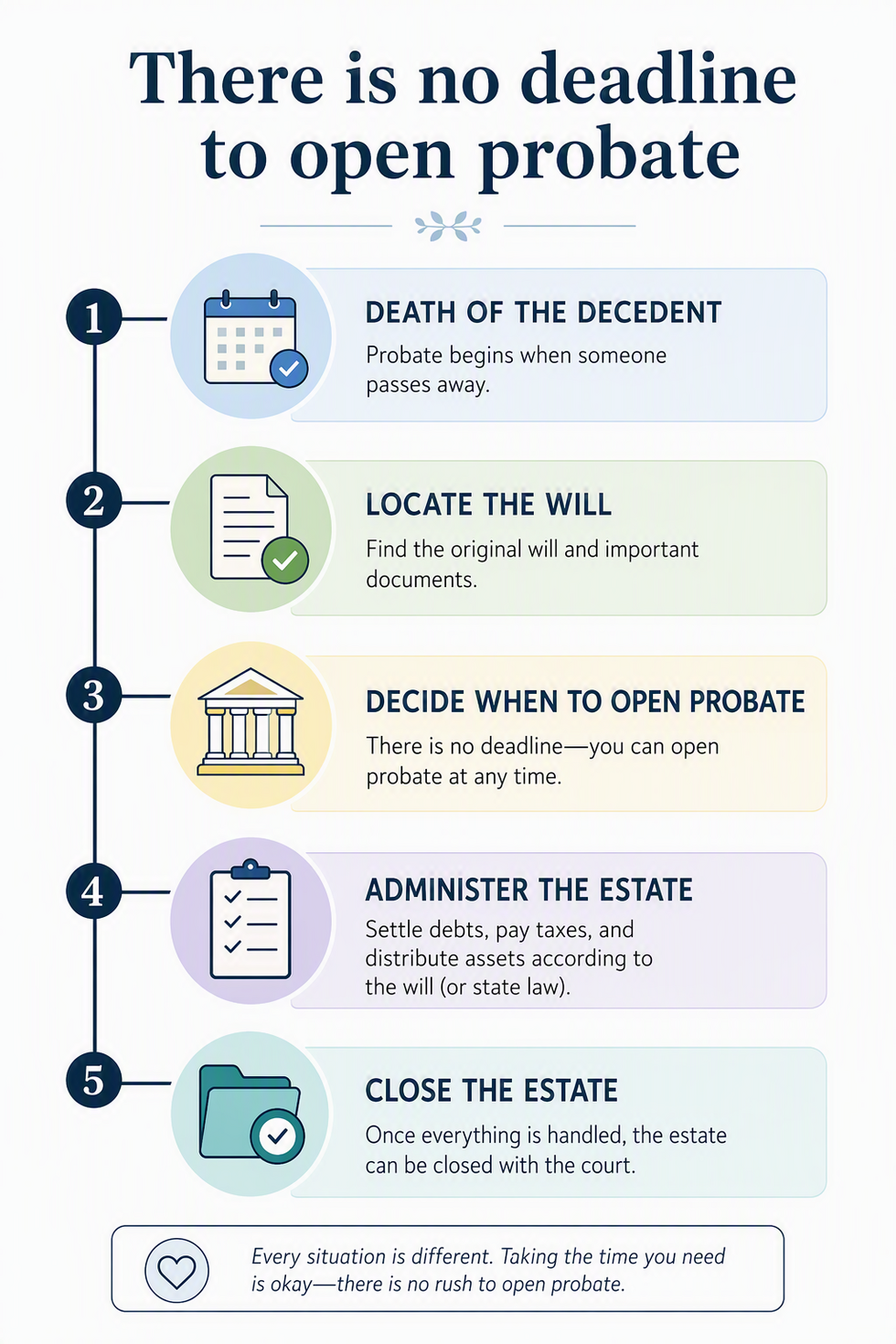
No. Florida's Probate Code contains no provision requiring an estate to be opened within any particular period, and there is no statute of limitations on admitting a will. Families regularly open estates years later, and Florida courts admit those wills.
That answer surprises people, and it is routinely misstated online because many states do impose a filing window. Florida does not. The real question is not how long to file probate after death, but what you lose by waiting, and the answer to that is quite a lot.
How Soon After a Death Should You Start the Probate Process?
Within the first month is the sensible target, and one obligation lands almost immediately. Nothing forces the estate open, but the person holding the last will has a duty that begins the moment they learn of the person's death.
The 10-day rule for depositing the original will
Under section 732.901, the custodian of a will must deposit it with the clerk of the court having venue within 10 days after receiving information that the testator is dead, along with the date of death or the last four digits of the testator's social security number. This is not the same as opening probate. It is a standalone duty to hand the paper over, and it applies even if nobody intends to administer anything.
The teeth are in subsection (2). On petition and notice, a custodian can be compelled to produce the will, and if the court finds no just or reasonable cause for holding it back, costs, damages, and a reasonable attorney's fee are adjudged against that custodian personally. If the original cannot be found, a copy can sometimes still be admitted, but that legal process is harder and less certain, which is its own argument for acting early.
How Long Do You Have to File Probate in Florida?
As long as you like, legally speaking, and that is exactly why the question misleads people. There is no cutoff for how long after death does probate need to be filed. There is instead a two-year line that changes what an estate is for.
The two-year creditor bar and why it changes everything
Section 733.710 says that two years after the death, neither the decedent's estate, the personal representative, nor the beneficiaries are liable for any claim or cause of action against the deceased person, whether or not letters of administration were ever issued. It is a hard bar, not a deadline someone can miss and then ask forgiveness for. The exception is a creditor who already filed a claim within those two years and has not been paid, and the section does not disturb a recorded mortgage or the right to foreclose it.
Compare that to a probate case opened promptly, where outstanding debts run on the much shorter schedule in section 733.702: the later of three months after first publication of the notice to creditors or thirty days after service on a particular creditor. Two different worlds.
| Question | Opened within months | Opened after two years |
|---|---|---|
|
Creditor claims |
Barred three months after publication |
Barred outright by section 733.710 |
|
Summary administration |
Only under the $150,000 ceiling |
Available regardless of the value of the estate |
|
Records and witnesses |
Still reachable |
Often gone for good |
Chapter 2026-57, Laws of Florida, raised that ceiling to $150,000 effective July 1, 2026, and I wrote about what the change means for Lee County families.
Who Is Responsible for Filing Probate After a Death?
Nobody is conscripted. Florida does not appoint a person and order them to act, which is precisely how estates drift for years. Section 733.202 says only that any interested party may petition for administration, and in practice the petition comes from one of four places.
- The named personal representative. A last will nominates someone, and that nomination gives them priority, not an obligation to serve.
- Beneficiaries and heirs. Anyone with a stake can petition, including when the nominated executor of the estate declines or goes quiet.
- Creditors. A creditor is an interested party too, and a bank or hospital will occasionally open an estate to reach assets before the two-year bar closes.
- The person holding the will. Their 10-day deposit duty is separate, but depositing often prompts the family to move.
Is Probate Always Required After Someone Dies?
No, and this is where many families discover they have no filing problem. Probate reaches only assets titled in the deceased person's sole name with no automatic successor. Everything else transfers on its own, and Florida charges no estate taxes on any of it.
- Property held in joint tenancy with rights of survivorship passes to the surviving owner by operation of law, with no court oversight.
- Financial accounts, retirement accounts, and life insurance policies with a living named beneficiary pay directly and never become probate assets.
- Assets retitled into a funded revocable trust are governed by the trust, not the court.
- Florida does not use a small estate affidavit the way many states do, though section 735.301 allows disposition without administration for the smallest estates.
Our guide to assets exempt from probate in Florida walks the full list, and the firm's video Do All Assets Go Through Probate in Florida? covers the same ground. Even so, one overlooked bank account or a single parcel of real property in a sole name is enough to require opening a case.
What Happens If Probate Is Not Filed in Time?
Waiting is not free. No penalty arrives in the mail, which is exactly the problem: the costs are quiet, cumulative, and mostly borne by the people who inherit.
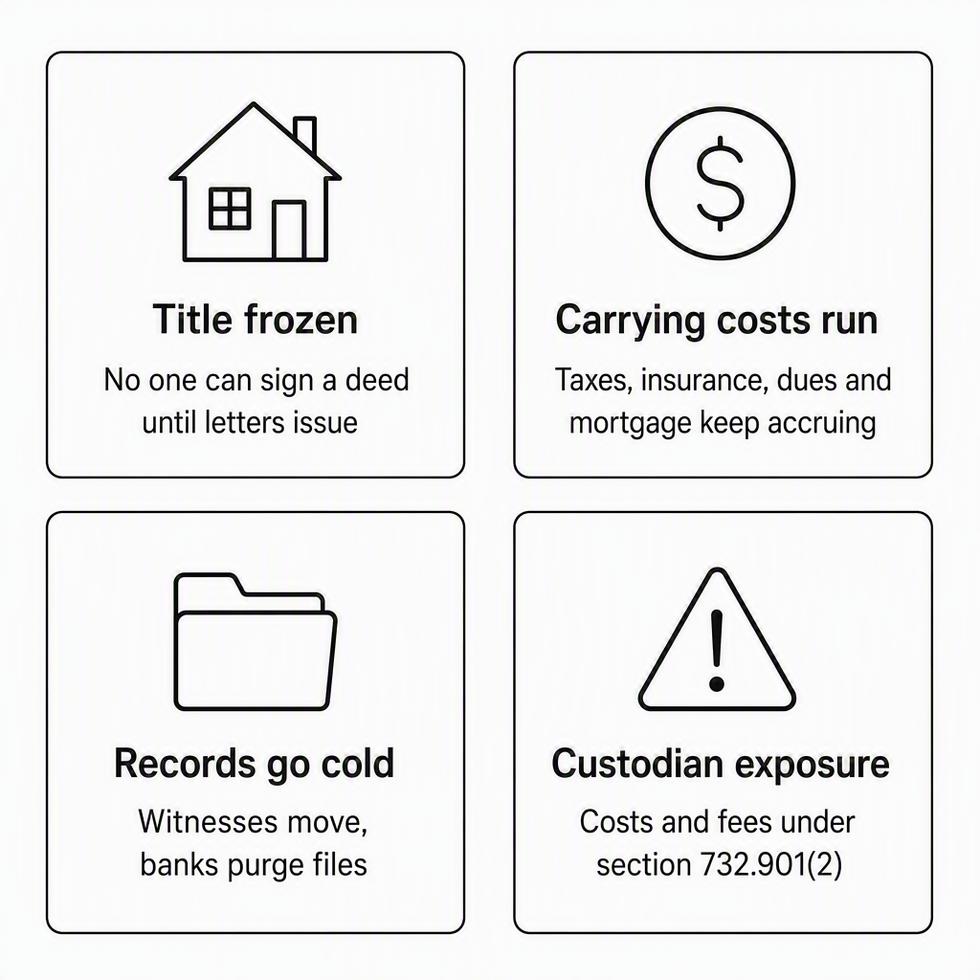
Real property cannot be conveyed, because no one holds authority to sign a deed until letters of administration issue. That freezes any sale, and we covered the mechanics in selling a house that is in probate. Meanwhile property taxes, hazard insurance, association dues, and mortgage payments keep running against a house nobody lives in, and each is paid out of what the heirs would otherwise receive.
The evidentiary picture decays too. Witnesses move or die, financial institutions purge records, and building an inventory of assets from a ten-year-old paper trail costs far more in professional guidance than it would have at the start. Accounts left long enough go to the state as unclaimed property, recoverable but slow. And the custodian who sat on the will carries personal exposure for costs and fees under section 732.901(2) the whole time.
Can someone force probate to be opened?
Yes, in the practical sense. Because any interested person may petition, a beneficiary being stonewalled does not need the nominated executor's consent. They file their own probate petition and ask the probate court to appoint someone, usually without a hearing.
The court will not order a reluctant nominee to serve. What it will do is move past them. A nominee who neither petitions nor renounces can be bypassed, and the judge appoints a qualified alternate. Separately, a will custodian can be compelled to deposit the document, with costs and fees attached if they had no reasonable excuse.
How Long Does Probate Usually Take After Filing?
Most uncontested Florida estates run four to twelve months once opened, and the floor is set by the three-month creditor claim window rather than court backlog. Summary administration is faster, often four to eight weeks, because it appoints no personal representative.
For the breakdown by procedure, see my earlier article, How Long Does Probate Take in Florida? A SWFL Attorney's Honest Timeline. The firm's video What Is Summary Administration? Florida's Short-Form Probate explains when it fits.
Once a case opens, a second set of clocks starts, and these are real deadlines. Under Fla. Stat. § 733.212, an interested person served with the notice of administration, in the manner provided for formal notice, has three months to object to the validity of the last will, the venue, or the court's jurisdiction, or those objections are forever barred. People entitled to exempt property have the later of four months from service or forty days after a will proceeding ends. A surviving spouse electing against the estate has the earlier of six months from service or two years from the date of death.
Does Where the Person Lived Affect Probate Filing?
Yes, and it is the decedent's domicile that governs, not where the heirs live. Section 733.101 places venue in the Florida county where the person was domiciled; if they had no Florida domicile, in any county where their property sits; and failing both, where a debtor of theirs resides. For Southwest Florida families that means Lee, Collier, and Charlotte county estates are heard in the Twentieth Judicial Circuit.
Snowbirds complicate it. Someone who wintered in Naples but stayed domiciled in Ohio leaves an Ohio estate plus a Florida ancillary proceeding for the real estate here. Run the other way, a Fort Myers resident who kept a lake house up north leaves a second case there, because a Florida order cannot move out-of-state title. The firm's video Florida Estate With Out-of-State Real Estate: A Second Probate covers that. Other states' specific probate laws set their own filing rules; this article addresses Florida only.
Where Can You Find Official Guidelines on Probate Filing Deadlines?
Three sources are worth reading directly, with one caution attached.
The Florida Probate Code itself, Chapters 731 through 735 of the Florida Statutes, is the primary authority and free to read at the Legislature's site. The Florida Bar publishes a plain-English consumer pamphlet on probate explaining the personal representative's duties. Check the date on anything you read, including that pamphlet, which still describes the summary administration ceiling as $75,000 rather than the $150,000 figure in force since July 1, 2026. The Lee County Clerk of Court publishes local filing procedures and fee schedules.
Secondary summaries from a law firm or national content site are a starting point, not a substitute for the statute, and none is legal advice.
Speak to a Southwest Florida Probate Attorney Before More Time Passes
The Nussbickel Law Firm, P.A. is a Fort Myers firm devoted exclusively to estate planning, probate, and trust administration. We serve families throughout Lee, Collier, and Charlotte counties, and out-of-state families with a Florida estate to settle.
If a death is recent, we work out whether a case is needed at all, get the original will deposited on time, and open the right kind. If years have passed, that is a different and still solvable problem: we look at where the two-year bar leaves things, whether summary administration is now available, and what it takes to clear title on real property. Counsel is generally required in a formal administration, covered in do you need a probate attorney, and fees are paid from estate assets rather than your pocket, explained in who actually pays them.
Start now rather than at the two-year mark. Schedule a consultation or call our Fort Myers office, and bring the death certificate and the original will if you have them.
Frequently Asked Questions
How long after death do you have to file probate?
In Florida, there is no deadline. The Probate Code sets no filing cutoff and no statute of limitations on admitting a last will. The two-year creditor bar in section 733.710 is the line that actually changes the analysis.
Do you have to file probate after death if there is a will?
Not always. A will has to be deposited with the clerk within 10 days, but an estate is only needed if something was titled in the person's sole name. A will directs probate; it does not avoid it.
How long after death can you file probate in Florida?
Years later, if necessary. We open estates well past the two-year mark, usually to clear title to real property. Once someone has been dead more than two years, summary administration is available regardless of value.
When should you file probate after a death?
Within the first month or two is the practical answer for when to file probate after death, because delay costs money rather than triggering a penalty. Carrying costs on real estate accrue against the beneficiaries the entire time.
What happens if nobody files probate at all?
Sole-name assets stay frozen indefinitely. Titles cannot transfer, real property cannot be sold, and financial accounts eventually go to the state as unclaimed property. Nothing forces the issue, which is why estates sit for years.
Can you file probate years after someone dies?
Yes. Florida imposes no outside limit, and a decade-old estate can still be opened. Expect a harder evidentiary path, since witnesses scatter and records get purged, but the door does not close.
What happens if there is no will?
The estate passes under Florida's intestate succession laws, which fix the rightful heirs by statute. The court appoints an administrator instead of a nominated executor. Our guide to the probate process without a will walks it through.
Can beneficiaries open probate if the executor refuses?
Yes. Any interested person may petition for administration under section 733.202, so a beneficiary can file directly. A nominee who will neither serve nor renounce is bypassed, and the judge appoints a qualified alternate.
Gregory J. Nussbickel is the founder of The Nussbickel Law Firm, P.A. in Fort Myers, Florida. His practice is devoted exclusively to estate planning, probate, and trust administration for families throughout Southwest Florida.
This article is for general information only and is not legal advice. Reading it does not create an attorney-client relationship. Probate law changes, and every estate is different, so speak with a licensed Florida attorney about your specific situation.

Comments
There are no comments for this post. Be the first and Add your Comment below.
Leave a Comment