The Nussbickel Law Firm, P.A. Legal Blog

 
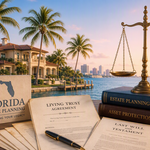
Living trust agreement and last will and testament on a desk with brass scales, beside a Florida waterfront home and palm trees at sunset

How to Avoid Probate in Florida? A Complete Guide

Posted by Gregory J. Nussbickel | Aug 17, 2026 | 0 Comments

How to avoid probate in Florida comes down to titling, not paperwork. Any asset that already has a legal destination at death, whether through a funded revocable trust, a Lady Bird deed, a payable-on-death registration, or a living named beneficiary, transfers without court involvement. Anything left in a sole name does not, and a will does not change that. Florida raised its summary administration ceiling to $150,000 on July 1, 2026, so more estates now qualify for the short form. This guide covers the six tools that work, how they compare on cost and control, and the five mistakes that still send Florida estates to court.


Life insurance policy and beneficiary designation forms on a Naples lanai table, illustrating life insurance and estate planning in Florida.

Life Insurance and Estate Planning: What's the Role?

Posted by Gregory J. Nussbickel | Aug 03, 2026 | 0 Comments

Life insurance and estate planning solve one shared problem: getting money to the right people at the right time. A death benefit paid to a living named beneficiary skips probate and is exempt from the insured's creditors under Florida law, but naming your estate destroys both protections, and the proceeds still count in your taxable estate if you owned the policy. This guide explains ownership versus beneficiary designation, when an irrevocable trust makes sense, why you should never name a minor directly, and how Southwest Florida families keep the two halves aligned.

A tandem kayak with two paddles on a Matlacha canal seawall at dusk, representing estate planning for married couples in Florida

Estate Planning for Married Couples: A Florida Guide

Posted by Gregory J. Nussbickel | Aug 02, 2026 | 0 Comments

Estate planning for married couples in Florida is not one shared document. Each spouse signs a will, a durable power of attorney, a health care surrogate designation, a living will, and a HIPAA release, and the couple's deeds and beneficiary forms are retitled to match. This Fort Myers attorney's guide covers the six documents per spouse, how joint titling and tenancy by the entireties actually control who inherits, the 30 percent elective share, homestead descent under section 732.401, and the $15,000,000 federal exclusion and portability election for 2026.

Three beach chairs in descending sizes on a Fort Myers Beach shoreline at sunrise, representing estate planning for grandchildren across three generations

Estate Planning for Grandchildren: Protect Their Future

Posted by Gregory J. Nussbickel | Aug 02, 2026 | 0 Comments

Estate planning for grandchildren means deciding what each grandchild receives, at what age, and who manages it until then. Florida does not let a minor own an inheritance outright, and a custodial account under the Uniform Transfers to Minors Act releases everything at 21. A trust is the only tool that sets staged ages, adds spendthrift and divorce protection, and automatically covers grandchildren born later. Florida charges no estate, inheritance, or state income tax, so the tax questions are federal: a $19,000 annual gift exclusion and a $15,000,000 lifetime exemption in 2026. Written for Southwest Florida grandparents.

Family-owned marina business on a Cape Coral canal, illustrating estate planning for business owners in Florida.

Estate Planning for Business Owners: What Should You Know?

Posted by Gregory J. Nussbickel | Jul 30, 2026 | 0 Comments

Estate planning for business owners is a two-document problem. Your will controls who inherits value, but your operating or shareholder agreement usually controls who gets authority over the company itself. Under Florida law an LLC member is dissociated at death, heirs often receive only an economic interest, and a personal representative may run an unincorporated venture for just four months without a court order. This guide explains what happens to each entity type, which documents close the gap, and how Southwest Florida owners fund the cash their estates will actually need.

Estate planning documents on the lanai of a Cape Coral, Florida canal home

What Are the Types of Trusts for Estate Planning?

Posted by Gregory J. Nussbickel | Jul 30, 2026 | 0 Comments

The types of trusts for estate planning sort into two families, revocable and irrevocable, and every specialty vehicle is a variation on one of them. This Fort Myers attorney's guide compares revocable living, testamentary, special needs, spendthrift, charitable, ILIT, QPRT and QTIP marital arrangements side by side, explains which Florida assets belong inside and which do not, gives current Florida pricing, and covers the state rules that change the analysis here: no self-settled asset protection under Fla. Stat. 736.0505, homestead devise limits, and no Florida estate or inheritance tax.

Estate planning documents on a kitchen table in a Cape Coral, Florida home

Estate Planning Checklist for Seniors: 12 Steps

Posted by Gregory J. Nussbickel | Jul 30, 2026 | 0 Comments

An estate planning checklist for seniors comes down to six documents and one annual review: a last will, a revocable trust when one fits, a durable power of attorney, a health care surrogate designation, a living will, and a HIPAA release. This Fort Myers attorney's guide walks all twelve steps in order, with the Florida rules that actually govern them, including the two-witness signing requirement, the ban on springing powers of attorney, and the $15,000,000 federal exemption that keeps taxes off most families' lists.

A Southwest Florida estate planning consultation table with documents by a sunlit Naples window

How to Find an Estate Planning Attorney for Your Needs?

Posted by Gregory J. Nussbickel | Jul 24, 2026 | 0 Comments

The most reliable way to find an estate planning attorney in Florida is to combine professional referrals with The Florida Bar's public directory and Lawyer Referral Service, then vet your short list on focus, fees, and fit. This Fort Myers attorney's guide explains what an estate planning lawyer does, when you need one, the questions to ask, what a Florida plan typically costs, and the warning signs that tell you to keep looking — so Southwest Florida families can hire with confidence.

Florida will and revocable living trust documents on a Cape Coral kitchen table

Average Cost of Will and Trust in Florida (2026 Guide)

Posted by Gregory J. Nussbickel | Jul 22, 2026 | 0 Comments

In Florida, a simple will typically costs $450 to $1,000, while a revocable living trust document: $1,000 to $2,500; trust package (individual): $1,500 to $5,000; trust package (couple): $2,500 to $7,500. This guide from a Fort Myers estate planning attorney breaks down the average cost of a will and trust in Florida, explains what each package includes, shows what drives the price, and weighs a trust's upfront cost against the probate expenses it can spare a family in Lee, Collier, and Charlotte counties.

Cape Coral canal home, an example of Florida homestead property that is generally exempt from probate

What Assets Are Exempt from Probate in Florida?

Posted by Gregory J. Nussbickel | Jul 22, 2026 | 0 Comments

Not everything a Florida resident owns has to pass through probate. Assets that are exempt from probate in Florida include non-probate assets that transfer by title or beneficiary designation — jointly owned property, payable-on-death accounts, life insurance, retirement funds, and revocable living trust assets — plus statutory exempt property and homestead protected for the family under the Florida Probate Code. This Fort Myers attorney's guide explains which assets skip court, which still require probate, and the common titling mistakes that accidentally pull a protected asset back into the process.

A last will and a thicker revocable living trust document side by side on a screened porch table in Sanibel, Florida

Who Needs a Trust Instead of a Will to Avoid Probate?

Posted by Gregory J. Nussbickel | Jul 19, 2026 | 0 Comments

You likely need a revocable living trust rather than a will alone if you own Florida real estate, own property in a second state, have minor children or a beneficiary with special needs, own a business, or have a blended family. A will does not avoid probate — it directs it. A funded trust does, because the trust owns the assets at your death. This guide walks through who actually benefits, what a trust costs against what probate costs, and why an unfunded trust protects no one. Written for Southwest Florida families.

Last will and testament on a kitchen table in a Naples, Florida home overlooking a screened lanai

Does a Will Avoid Probate in Florida for Your Family?

Posted by Gregory J. Nussbickel | Jul 19, 2026 | 0 Comments

A Florida will does not avoid probate. It directs probate. Any asset held in the decedent's sole name, without a beneficiary designation or survivorship rights, still passes through the probate court before it reaches the people named in the will. This guide explains what a will actually does after death, which assets land in probate and which skip it, what Florida probate costs, and how the summary administration threshold that doubled to $150,000 in July 2026 changes the math. Written for Southwest Florida families deciding between a will, a trust, or both.

Empty bench overlooking Charlotte Harbor in Punta Gorda, Florida, where families face probate without a will

Probate Process in Florida Without a Will: What Happens Next?

Posted by Gregory J. Nussbickel | Jul 15, 2026 | 0 Comments

When someone dies without a will in Florida, the estate doesn't go to the state — it goes through intestate probate, where Florida statutes decide who serves as personal representative and who inherits. This guide from a Fort Myers probate attorney walks through the full probate process without a will: the court's priority list for appointing an administrator, the intestate succession rules for spouses and children, which assets skip probate entirely, typical costs and timelines in Lee, Collier, and Charlotte counties, and the summary administration limit that doubled to $150,000 on July 1, 2026.

A Southwest Florida canal-front home, the kind of asset a will and a trust can both seem to cover

Does a Will Override a Trust? What Really Happens If They Conflict

Posted by Gregory J. Nussbickel | Jul 11, 2026 | 0 Comments

A will does not override a trust, and a trust does not override a will — in Florida they usually control different assets, decided by how each asset is titled. Property moved into a funded revocable trust is governed by the trust; assets left in your sole name pass under your will through probate. This guide from a Fort Myers estate planning attorney explains which document controls which asset, the funding mistakes that cause most "conflicts," when a new will can amend a trust under Fla. Stat. § 736.0602, and how the July 2026 summary administration change affects Southwest Florida families.

A Cape Coral canal home — the kind of estate asset Florida probate attorney fees are paid from

Why Would You Need a Probate Attorney in Florida — and Who Actually Pays the Fees?

Posted by Gregory J. Nussbickel | Jul 10, 2026 | 0 Comments

Who pays probate attorney fees in Florida? The estate does. Attorney fees are paid from the deceased person's assets as a Class 1 expense of administration under Fla. Stat. § 733.707, ahead of ordinary creditors, so the personal representative never pays personally — and beneficiaries bear the cost through smaller inheritances. This guide from a Fort Myers probate lawyer explains Florida's presumed-reasonable fee schedule under § 733.6171, when extraordinary fees can be charged to one person's share, and when small estates skip attorneys entirely.

Gulf-access canal home in Cape Coral, the kind of Southwest Florida property that passes through probate

How Long Does Probate Take in Florida? A SWFL Attorney's Honest Timeline

Posted by Gregory J. Nussbickel | Jul 05, 2026 | 0 Comments

How long does probate take in Florida? For most families, anywhere from a few weeks to about a year. Summary administration — the small-estate shortcut, now available for estates up to $150,000 after a July 2026 change — often closes in four to eight weeks, while a typical uncontested formal administration runs six months to a year because of Florida's three-month creditor claim period. This guide from a Fort Myers probate attorney breaks the timeline down by procedure, explains the statutory clocks that set the pace, and flags what stretches an estate into years, for families in Lee, Collier, and Charlotte counties.

Do You Really Need a Probate Attorney in Florida? A Fort Myers Lawyer's Straight Answer

Posted by Gregory J. Nussbickel | Jul 05, 2026 | 0 Comments

Most Florida probate cases legally require an attorney — Florida Probate Rule 5.030 mandates that a personal representative in a formal administration be represented by Florida counsel unless they are the estate's sole interested person or a Florida attorney themselves, exceptions that rarely apply in practice. But not every estate needs formal probate. This guide explains the two small-estate shortcuts that don't require a lawyer — disposition without administration (§735.301) and summary administration (§735.201), whose threshold just doubled to $150,000 effective July 1, 2026 — plus what a probate attorney actually does, the six steps of formal administration in the Twentieth Judicial Circuit, Florida's presumed fee schedule under §733.6171, realistic timelines, and the four probate myths that cost Southwest Florida families the most.

Florida Doubles the Summary Administration Limit to $150,000: What It Means for Lee County Families

Posted by Gregory J. Nussbickel | Jun 12, 2026 | 0 Comments

Effective July 1, 2026, CS/HB 1337 doubles Florida's summary administration threshold from $75,000 to $150,000 — opening the shorter probate path to many more Lee County estates. But summary administration appoints no personal representative, and the people who receive the assets can remain personally liable to creditors for up to two years. Fort Myers probate attorney Greg Nussbickel breaks down what changed, who qualifies, and why filing timing matters this summer.

  • 2 of 2

Menu